
Home – Landing Page
RESERVA NATURAL DON LUIS
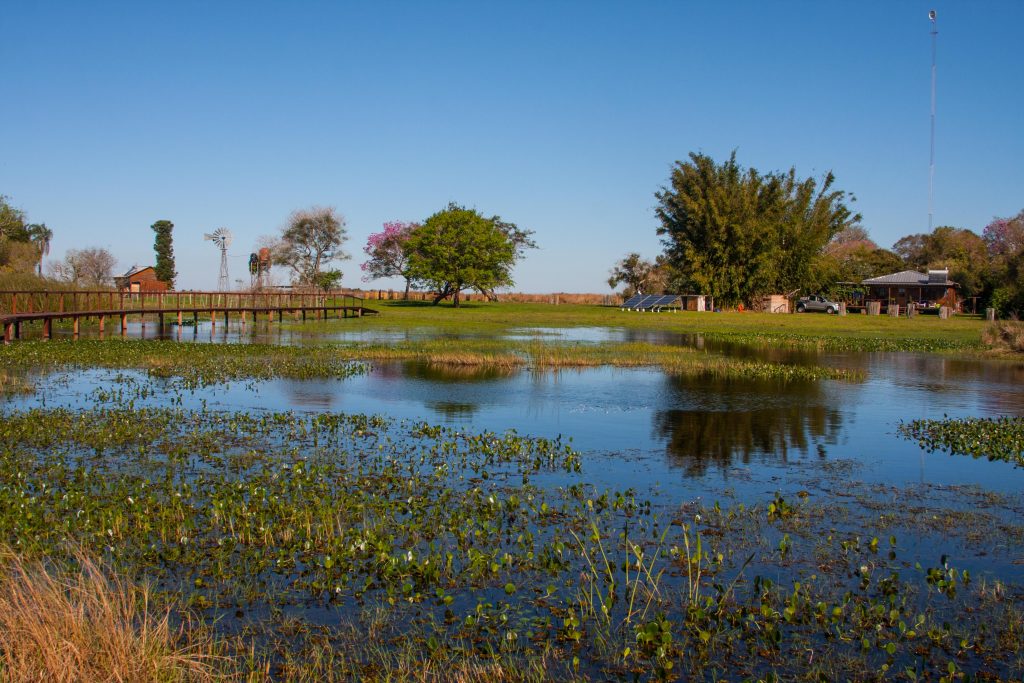
In 2010, following a two-year search for the right location, we acquired Reserva Don Luis to establish a protected reserve. Extensive restoration work has been undertaken to transform this former cattle ranch back into a thriving natural ecosystem. As well as being a nature reserve we are also a research station and have several projects in the pipeline including our popular bat research program and our research into the Ibera Seedeater. In addition, the Group hosts three conservation projects in partnership with Rewilding Argentina, supporting the reintroduction of the Giant Anteater, continued work on the Red-and-Green Macaw reintroduction programme and the recent acquisition of 4 Bare-faced Curassows, further strengthening its commitment to biodiversity conservation and international collaboration.We welcome visiting biologists and conservation scientists for research into our native species. We often need volunteers, especially in the Argentine spring, to help with our projects, and the running of the place. If you would like to volunteer please use the contact form to get in touch.
OUR WILDLIFE
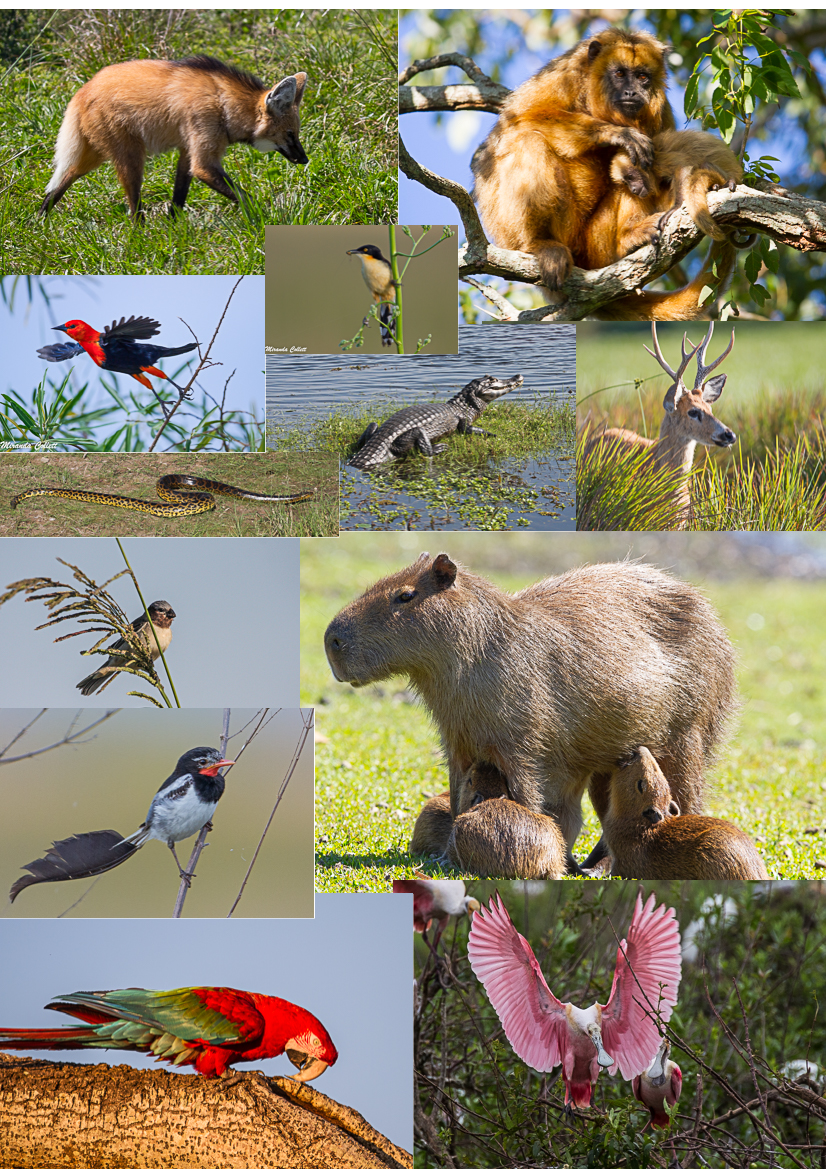
Reserva Don Luis in the Esteros del Ibera, hosts a rich variety of wildlife, including several endangered species such as Ibera Seedeater, Strange-tailed Tyrant, Marsh Deer, Giant Anteater, Neotropical Otter, Bare-faced Curassow. We also host reptiles such as the Spectacled Caiman, snakes such as the Yellow Anaconda, Howler Monkeys, Capybaras and 16 species of bat.
Here are some examples:
Ibera Seedeater
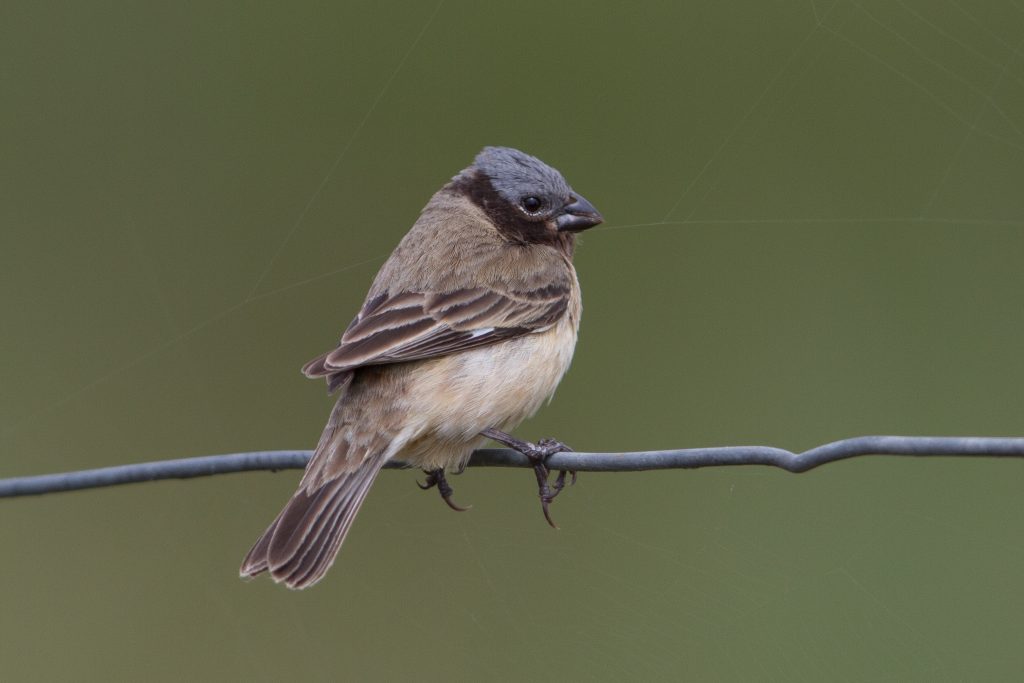
Sporophila iberaensis
Thanks to a grant from Mohamed bin Zayed conservation fund, we were able to study this species in the Argentine spring with volunteers from around the world. We were also able to purchase specialised camera traps to monitor the nests, and equipment for bird ringing. The funds have also helped us to secure our fences and allow for autumn prescriptive burning to reduce the prospect of wildfires. The Ibera Seedeater breeds in a very restricted area which includes our reserve. We will continue to protect and monitor this formerly Endangered bird, which has been upgraded to Near Threatened.
Jabiru
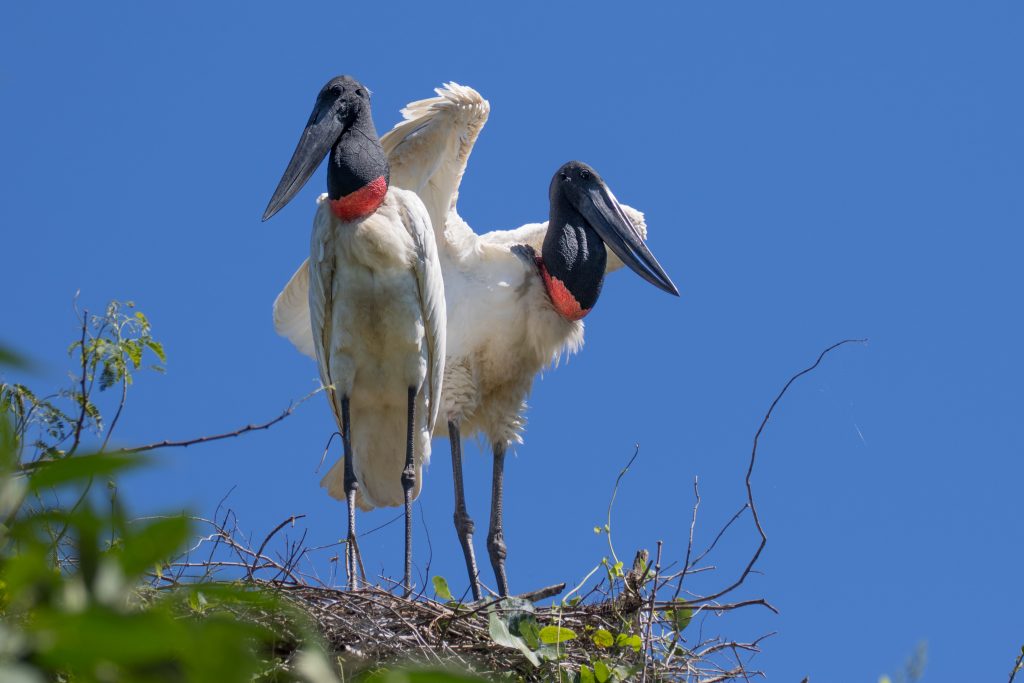
Jabiru mycteria
The Jabiru (or Yabiru in Argentina) is the tallest flying bird in the Americas and males can stand as high as 1.5m. Their range in South America extends from Mexico to Argentina and although locally common in a few places they are in decline. They are found in wetlands such as the Esteros del Ibera, Pantanal and favour freshwater marshland and shallow water in which to hunt. They feed on a wide range of prey such as reptiles, amphibians, fish, large insects and sometimes small mammals. They are a Stork from the family Ciconiidae and build huge nests in the tallest trees they can find. In our area of Ibera the trees are not very tall so the nests are quite visible. They normally lay 2 to 5 eggs which both adults brood. The young fledge at around 110 days and stay with their parents for another 3 months.
Maned Wolf
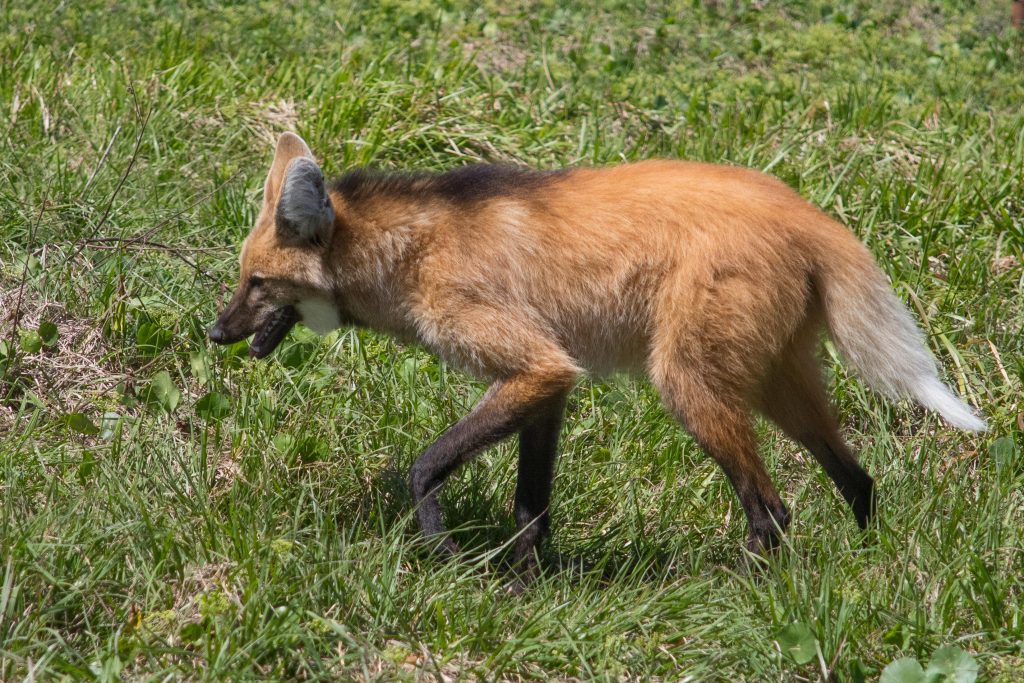
Chrysocyon brachyurus
The Maned Wolf is a solitary animal with a large range and is found only in northern parts of South America, such as Brazil, Eastern Bolivia and Northern Argentina. We have seen this ‘Near Threatened’ species at our reserve on many occasions but it seems to prefer dry conditions so when we are in wetland status (like currently), they are not usually seen. It is the largest canid of South America and is the only species in the genus ‘Chrysocyon’. It is listed as Near Threatened in the IUCN redlist although Brazil lists it as Vulnerable. It is nocturnal, has no natural predators (other than possibly the Jaguar) and preys on small mammals. Its omnivorous diet includes fruit as a major part, usually in the form of Solanum lycocarpum. In Argentina it is known as Aguará guazú.
Red & Green Macaw
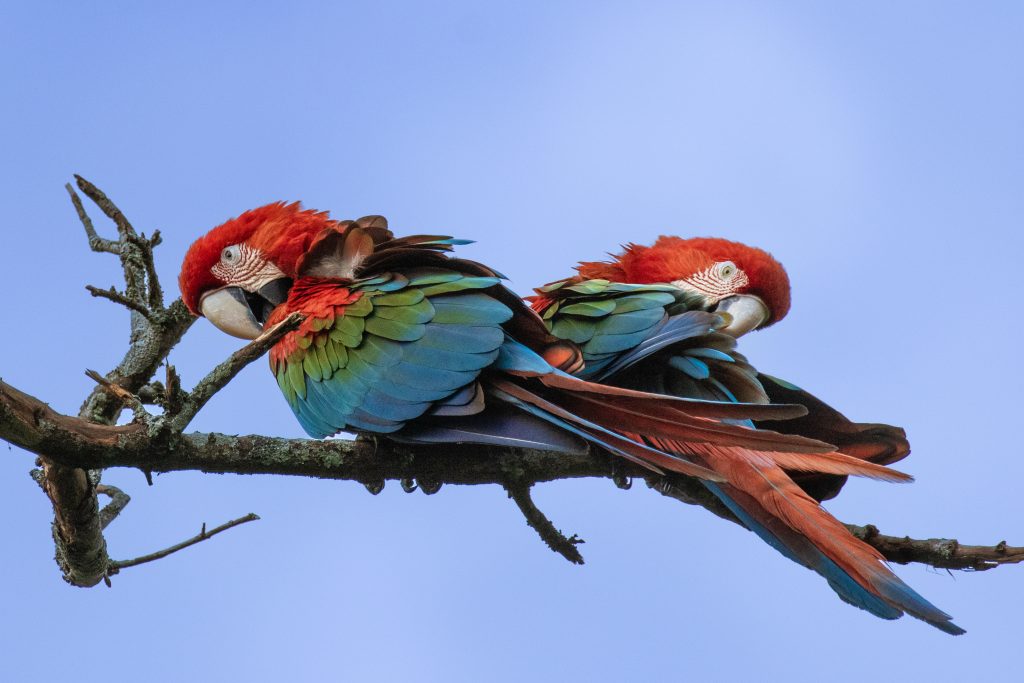
Ara chloropterus
These brightly coloured Macaws have been reintroduced to the Ibera marshes and there are now around a dozen flying free. They are considered Critically Endangered in Argentina due to the indiscriminate hunting and collecting that took place during the last century. The project was created by Re-wilding Argentina, and is now operated from our own reserve.We are privileged to see these birds in our garden and woodlands regularly. They are very brightly coloured and make a tremendous noise. Predominantly fruit eaters, these birds seem to enjoy the seeds of the Timbo and Inga tree. They are large birds with good flying ability and appear very acrobatic when feeding on the trees.
Giant Anteater
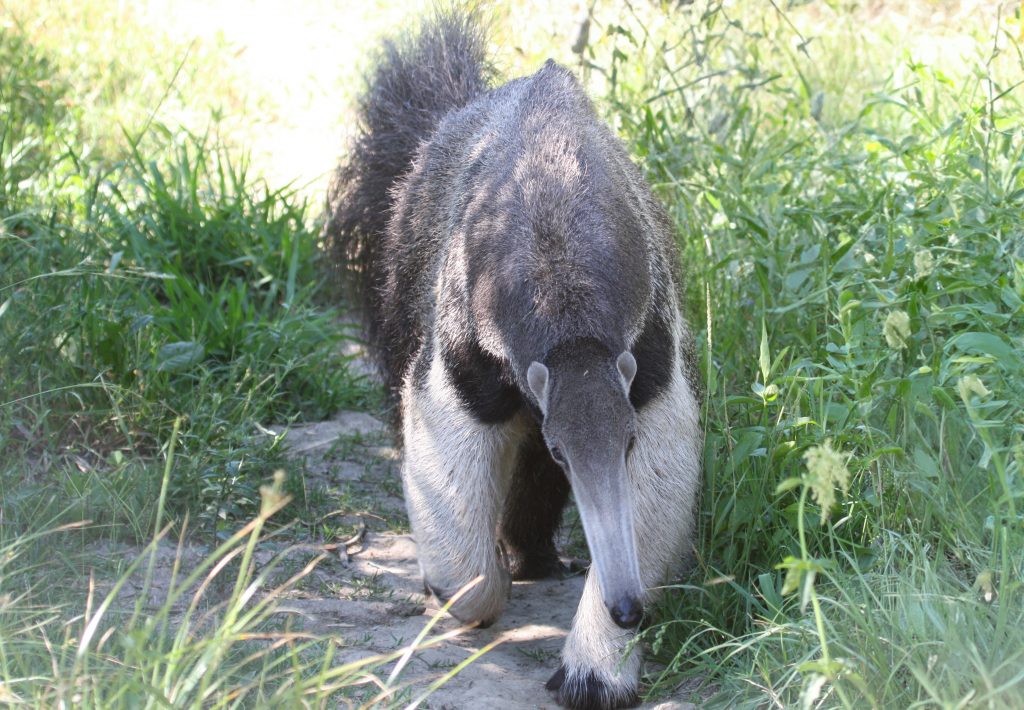
Mymecophaga tridactyla
The Giant Anteater was once common in Corrientes but became extinct in that area mainly due to the invasion of cattle ranchers with dogs.
Thanks to Rewinding Argentina, there are now over 100 Giant Anteaters which have been reintroduced to a safe conservation area of the esteros. They are being monitored carefully by biologists and volunteers and some have radio collars to enable tracking.
We now have Tupac, a 2 year old male, who has adapted well to our reserve, and is seen on camera trap and occasionally with the eye. We had a second anteater called Pirpi, but sadly the 2 males fought, even injuring themselves on occasion. Pirpi has now been relocated to the nearby National Park. We are now hoping for a female to become available for our reserve.
They are the largest of the anteaters and the only species in the genus ‘mymecophaga’. They have no teeth and a very low metabolism and body temperature. They have an excellent sense of smell, poor eyesight and hearing is debateable. In my experience they have quite good hearing as they always detected us when we tracked them to within 10 metres or so even though we invariably approached downwind.
Bare-faced Curassow
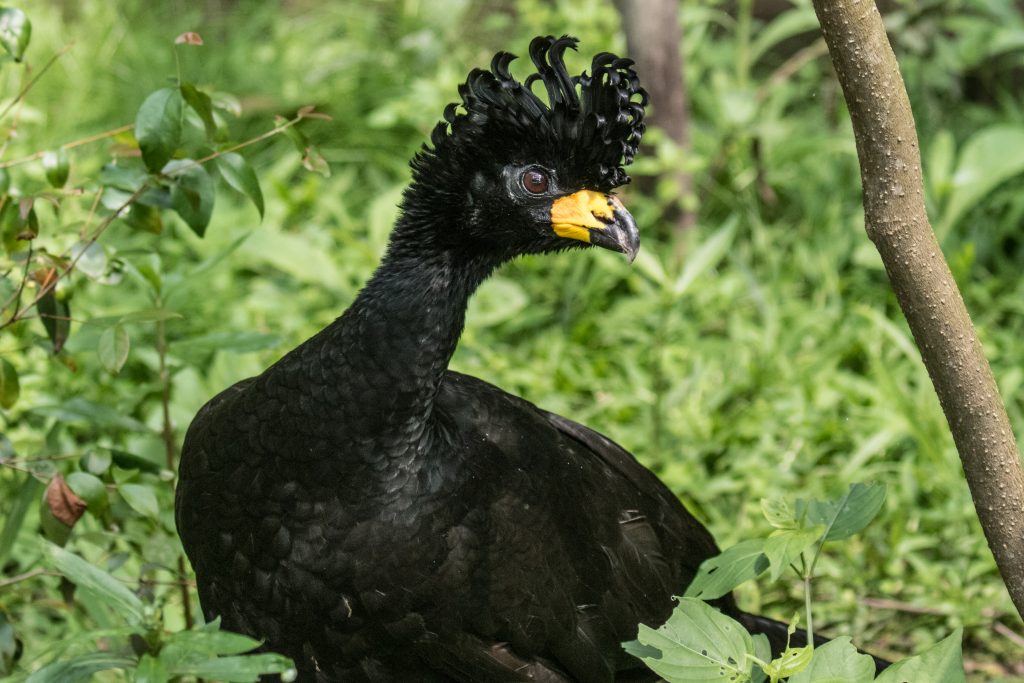
Crax fasciolata
Although the Bare-faced Curassow has not yet reached the criteria for endangered status worldwide, it is considered rare and threatened in Argentina where it occupies a small range in the extreme NE. It has been extinct from the Ibera Marshes for many decades.
We housed a male with us at Reserva Don Luis from 2015 to 2019 as part of a reintroduction project. Sadly he passed away due to natural causes.
In April we received 4 male Curassows from Rewinding Argentina, initially to be housed in one of our purpose built corrals for the species. They will be released into the wild in due course.
This species is from the family Cracidae and measures abour 85cm in length. The male is predominantly black with pure white underparts. It has a black curly crest which it raises when alert. The tail is tipped white and the base of the bill is bright yellow.
The female is quite different and has cinnamon underparts barred with black, and a black and white curly crest. Upperparts are black barred with white.
The call is a soft call which resembles the Argentine name of ‘Muitu’
The species is classed as Vulnerable in the IUCN redlist and is considered rare and threatened in Argentina.
Strange-tailed Tyrant
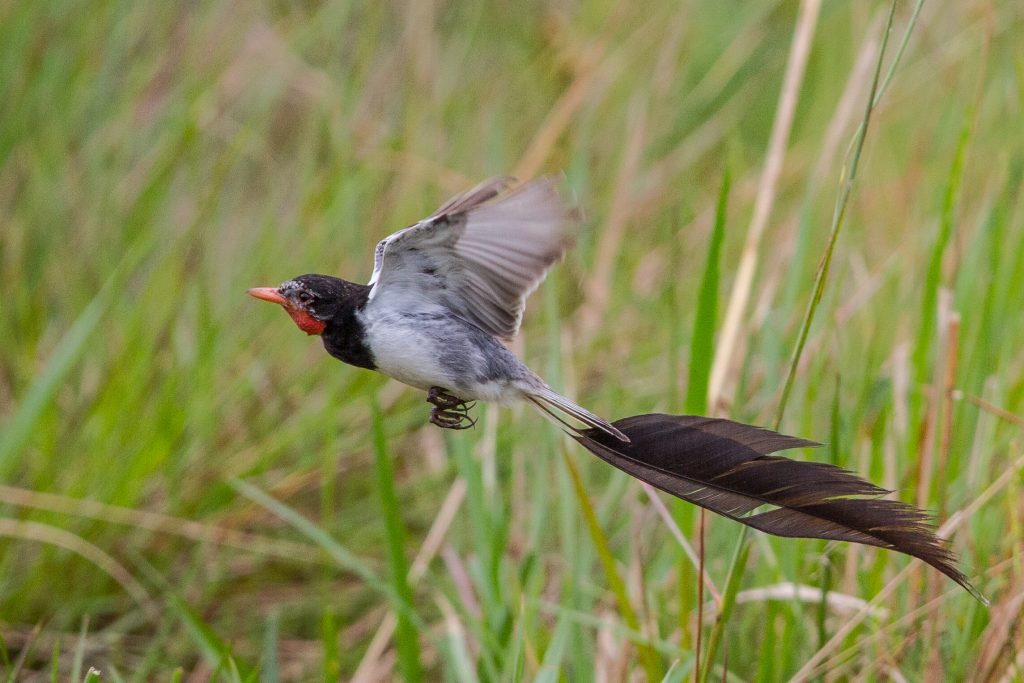
Alectrurus risora
The Strange-Tailed Tyrant lives up to its name as it has a tail twice the length of its body and is quite unusual looking. The male has a featherless throat which turns bright red during the breeding season. Sexual dimorphism is apparent with the female coloured in shades of brown and less striking. She also has a long tail but it is a lot less cumbersome.
The Strange tailed Tyrant has a small range and appears to be resident in small pockets. The range is from Southern Paraguay to NE Argentina with the largest population being in the Esteros del Ibera where it can be locally common. There are also a few pockets left in Brazil and Uruguay.
We are delighted that we now have a good sized population of these birds at Reserva Don Luis, and whilst it can be transient, they are breeding here very successfully. Our conditions here are perfect for this species and we manage our land to accommodate them. After our devastating fires of 2012 and again in 2022, they they returned to breed in good numbers.
Their habitat is wet grasslands near marshes and they require tall grass of up to 1.5m for breeding. Their staple diet is invertebrates. Although they can coexist with cattle, problems occur when grass is routinely burnt as a management technique. They are also intolerant of fertilizers and pesticides. They are listed as Vulnerable on the IUCN redlist and appear in appendix 1 of CITES. Threats are habitat loss due to afforestation, rice fields and to a lesser extent, cattle ranching.
Marsh Deer
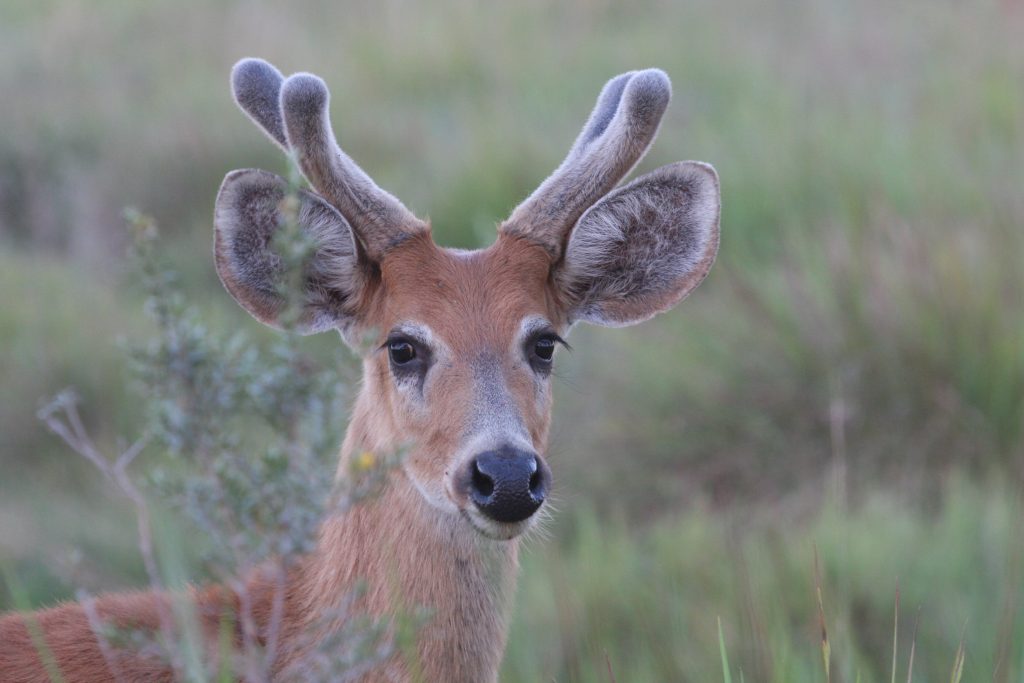
Blastocerus dichotomus
We are very fortunate to have so many Marsh Deer at our reserve. It is classed as Vulnerable in the IUCN redlist and is known as Ciervo de los Pantanos in Argentina.
This is the largest of the South American deer and can reach a height of up to 1.2m, and a weight of between 100-150kg. Colouration is rufous in the spring/summer but it becomes browner during the winter. They are characterised by their black lower legs. Males can develop antlers up to 60cm in length with up to 8 points. Generally the female bears one offspring per year which can be at any time of year.
They love to graze in shallow water and marshland and their hooves are specially adapted to this type of habitat. They eat leaves, aquatic plants and roots and are good swimmers.
The range of the Marsh Deer is generally confined to Paraguay, the SW of Brazil and the NE of Argentina although there are still small pockets of these animals in the wetlands of Bolivia and Peru.
Threats to this species come from habitat loss, contact wtih cattle which can cause disease and to a lessening degree hunting. The dam at Yacyreta, on the Argentina/Paraguayan border has caused a large loss of habitat for the Marsh Deer owing to the change in water levels. Drainage of marshland for rice growing is also a problem. Natural predators include the Jaguar and Puma but there are none of the former and only a handful of the latter in the Ibera Marshes.
About Our Trust
Our trust has been formed with the aim of preserving habitat for species with particular emphasis on areas for endangered species. Most of our interest at the current time lies in North East Argentina. With this aim in mind, we completed the process of buying 1600 hectares of private land in the Esteros del Iberá in 2010. This is a vast wetland in the province of Corrientes consisting over 15,000 km2.
In 2022 our Trust purchased La Coral, a 100Ha forest in Misiones, near San Pedro. We are trying to get funding to protect this valuable piece of Atlantic Forest.
Iberá is the second largest wetland in the Americas, after the Pantanal in Brazil, and has amazing biodiversity which includes over 330 species of bird. It is still relatively unknown and needs a lot more research on the numerous species. Mammals include the near-threatened (NT) Pampas Deer* the (NT) Maned Wolf *and the vulnerable (VU) Marsh Deer.* The (NT) Giant Anteater* has recently been reintroduced to our reserve and we are keeping a look out for it with out camera traps and sometimes our own eyes.
Endangered birds include the (NT) Ibera Seedeater, the (VU) Strange Tailed Tyrant, the (VU) Black & white Monjita,the (VU) Ochre breasted pippit, 2 other Sporophila seedeaters (CR, NT), the Red & Green Macaw (VU), and the Bare-faced Curassow (VU).*
* IUCN Redlist
Client Testimonials
Rineke Gordijn

The whole experience was amazing. Our stay included a guided tour with a driver who picked us up where we were staying before. He explained a lot about the park, could name any animal we saw and was very understanding of our interests. Then we arrived at the Don Luis reserva, where the wild wetlands lodge is located. We were welcomed with a delicious lunch, adapted to us vegetarians and vegans. Then we had some time to relax at the eco lodge, which is well equipped with anything you could wish. My parents have used that time to read up on the wildlife or Iberá in the books that are available at the lodge. The best thing is the view and the sounds of the birds, wild guinea pigs and capibaras closeby. And during dawn, the monkeys in the little forest nearby! We also did some horseriding with them, luckily the horses were very calm for my parents who never had been on a horse before. The other meals were just as lovely, for example a vegetable parilla for lunch. Most food comes from the vegetable garden and chickens they have at the reserva. You can see caymen at a little lake close to the lodge, or anywhere on the road when there’s sun. Would definitely recommend wild wetlands lodge to anyone who wants the most out of the natural wonders of Iberá.
Maria Isabel Ledesma

We visited the reserve as a family (children ages 5 and 10) and it was the perfect option. Everything is taken care of, from meals to excursions tailored to the children’s and parents’ schedules (for large specific bird watching and general wildlife excursions). But life on the San Luis reservation surrounds you! From the gallery and surroundings of the cabin we already saw everything. A marvel of diversity: amphibians, reptiles, mammals, birds and insects (don’t forget repellent). We will return!
Pierre-Emmanuel Removille

An unforgettable experience ❤️ Thank you Alejandra, Cepi & all the volunteers Dani, Léo: you are great! All lovers of nature, wildlife & birds 🦅 The excursions are great! The lodge / room lost in the middle of nature & unique! Great food and welcome 👍
Frederika Meyer

An incredible place, full of peace and superbly looked after by Ale and Cepi! They allow you to see wildlife in the wild. They share their knowledge, especially the sighting of free-roaming macaws! An experience worth living! Thank you for everything!